 World Wide Offices

Category: Case Studies
How to Recover from an Online Dating Scam
TABLE OF CONTENT :
When Love Becomes a Cyber Trap: How We Helped a Victim Recover $20,000 from a Fake Romance Scam
Introduction
Online dating scams are a kind of fraud where scammers make fake profiles on dating apps or websites to trick people into a romantic relationship. After gaining trust, they trick victims into sending money, giving personal information, or letting them access accounts.
These scams can happen to anyone, and millions of people worldwide have already lost money to scammers pretending to be romantic partners.
In this case study, you’ll know how to recognize warning signs of a romance scam, the steps to take immediately if you fall victim, and how we traced the fraudsters.
How To Spot Online Dating Scams
- They live far away or travel a lot - Scammers often say they are overseas, working on an oil rig, in the military, or with international organizations. Being far away is their main reason for not meeting in person.
- Moving too fast in the relationship - They may say they love you quickly, talk about marriage, or claim a “special bond” before you know them well. This “love bombing” is meant to gain your trust quickly.
- Avoiding video calls or meetings in person - Even if they promise to meet, they’ll give excuses like “technical issues,” “busy schedule,” or “bad internet.”
- Asking to move the chat off the dating site - They want to talk on WhatsApp, Telegram, email, or text to avoid the dating platform’s safety checks.
- Profiles that are too perfect or very basic - Their photos may look like magazine pictures, AI-generated, or stock images. Their profile might have very little information, or they may copy generic text from other profiles.
- Inconsistent or suspicious stories - Scammers sometimes work in groups, so their story may change or not match what they told you before. If their story doesn’t add up, it’s a red flag.
- Asking too many personal questions - They want to know about your money, family, or work, which can be used to trick you or steal your identity.
- Emotional manipulation and drama - They may say they recently lost someone, are seriously ill, or have family emergencies to make you feel sorry for them.
- Requesting money - This is the biggest warning sign. They might ask for help with travel, medical bills, emergencies, investments, or business opportunities. They usually want gift cards, cryptocurrency, wire transfers, or other payments that are hard to trace.
- Little or no online presence - Most scammers have very little information about themselves outside the dating site. You can try searching online to notice if their profile is real.
- Too many compliments or flattery - Scammers use charm to make you feel special and connected very quickly.
- High-pressure tactics - They push you to send money or personal details quickly, often saying it’s urgent.
- Trying to control your emotions - They may request you to hide the relationship from friends or family, saying others won’t understand your “special bond.”
Always trust your instincts, take your time, check information carefully, and never send money or personal details to someone you haven’t met in real life.
What To Do Immediately If You Were Dating Scammed
- Don’t reply to any messages, emails, or calls from the scammer. Even a single reply can give them more opportunities to manipulate you.
- Save all messages, emails, photos, and receipts of any money sent. This evidence is very important if you report the scam to the authorities or try to recover your money.
- You can file a complaint with your local cybercrime unit or fraud hotline. In the U.S., you can report to the FBI’s Internet Crime Complaint Center (IC3).
- If you sent money, contact your bank or payment service immediately. Ask them to monitor your account and freeze transactions if possible.
- If you shared personal details, like ID numbers or passwords, update your passwords and enable two-factor authentication.
- Seek professional help from a cybersecurity expert. They can tell you what to do next, protect your devices, and help you recover your money.
Real Case Example
Our client was a 32-year-old professional woman who met someone on a popular international dating platform. She was not looking for anything serious at first. But soon, she received a message from a man who seemed perfect for her.
At first, their conversations were light and friendly. After two weeks, the man started calling her “soulmate” and sent long messages every morning and night. He promised to visit her soon. For our client, who wanted real companionship, this felt true.
One day, he claimed his company payment was delayed and asked if she could “loan” him some money. It started with $1,000. Then he asked for help with medical treatment for a sick relative. The excuses sounded real, and the client, trusting him, kept sending money. Over three months, she sent a total of $20,000 using wire transfers.
The turning point came when he promised to finally meet her. The client even went to the airport. But he never arrived. Instead, he said his passport was “seized” and asked for more money. That’s when the client realized something was wrong.
So, the client contacted TechForing, and we started investigating immediately.
Tools & Technologies That Help
- X1 Social Discovery
- Belkasoft Evidence Center
- Google Images
- TinEye
- Yandex Reverse Image Search
- Maltego
- Wireshark
- IP Location Trackers
- EnCase
- FTK (Forensic Toolkit)
- Cellebrite
- Chainalysis
- Elliptic
- Crystal Blockchain
- Norton
- Bitdefender
- LastPass
- 2FA apps
- ExifTool
- FotoForensics
- Recorded Future
- ThreatConnect
How We Solved the Situation
Step 1: Collecting and Saving Evidence
We first gathered all data: chat messages, emails, call logs, photos, screenshots, and payment receipts.
- X1 Social Discovery and Belkasoft Evidence Center helped us collect and save every piece of evidence safely.
- Cellebrite was used to get data from the client’s phone, including deleted messages. This made sure no important information was lost.
Step 2: Analyzing Messages and Metadata
Next, we studied the chat logs and emails using EnCase and FTK (Forensic Toolkit).
- These tools helped us check timestamps, hidden data, and device details.
- Recorded Future and ThreatConnect helped us compare the messages with known scammer profiles. This showed links to professional scam networks.
Step 3: Checking Images and Profiles
We verified all profile pictures using Google Images, TinEye, and Yandex Reverse Image Search.
- Many photos were stolen or used on multiple fake accounts.
- ExifTool and FotoForensics showed hidden data in images, like device type and time. This confirmed the pictures were fake.
- This also helped us find connections to other scam accounts.
Step 4: Tracking IP Addresses and Devices
To find the scammer, we tracked IP addresses and devices using Maltego, Wireshark, and IP Location Trackers.
- Even though the scammer used VPNs, we compared multiple logs.
- This led us to the scammer’s network hub in West Africa.
- The hub was linked to a professional group running romance scams.
Step 5: Following the Money
We tracked the client’s payments using Chainalysis, Elliptic, and Crystal Blockchain.
- These tools showed the flow of funds and which payments could still be recovered.
- Working with the client’s bank and sharing our findings helped freeze the remaining money.
- This allowed us to recover a large part of her $20,000.
Step 6: Securing Devices and Accounts
Finally, we made sure the client’s devices and accounts were safe.
- Norton and Bitdefender scanned for malware.
- LastPass and 2FA apps helped protect her accounts.
- We also updated passwords and turned on two-factor authentication to prevent future attacks.
Results & Outcome
- Successfully got back a large part of the $20,000 lost through wire transfers.
- Found and tracked the scammer network to a professional romance scam hub in West Africa.
- Made the client’s devices and accounts safe using new passwords and two-factor authentication.
- Checked and confirmed that all profile pictures and messages were fake, stopping further deception.
- Gave the client knowledge and tools to notice warning signs in future online relationships.
- Helped the client safely return to online dating with awareness and confidence.
Common Online Dating Scams
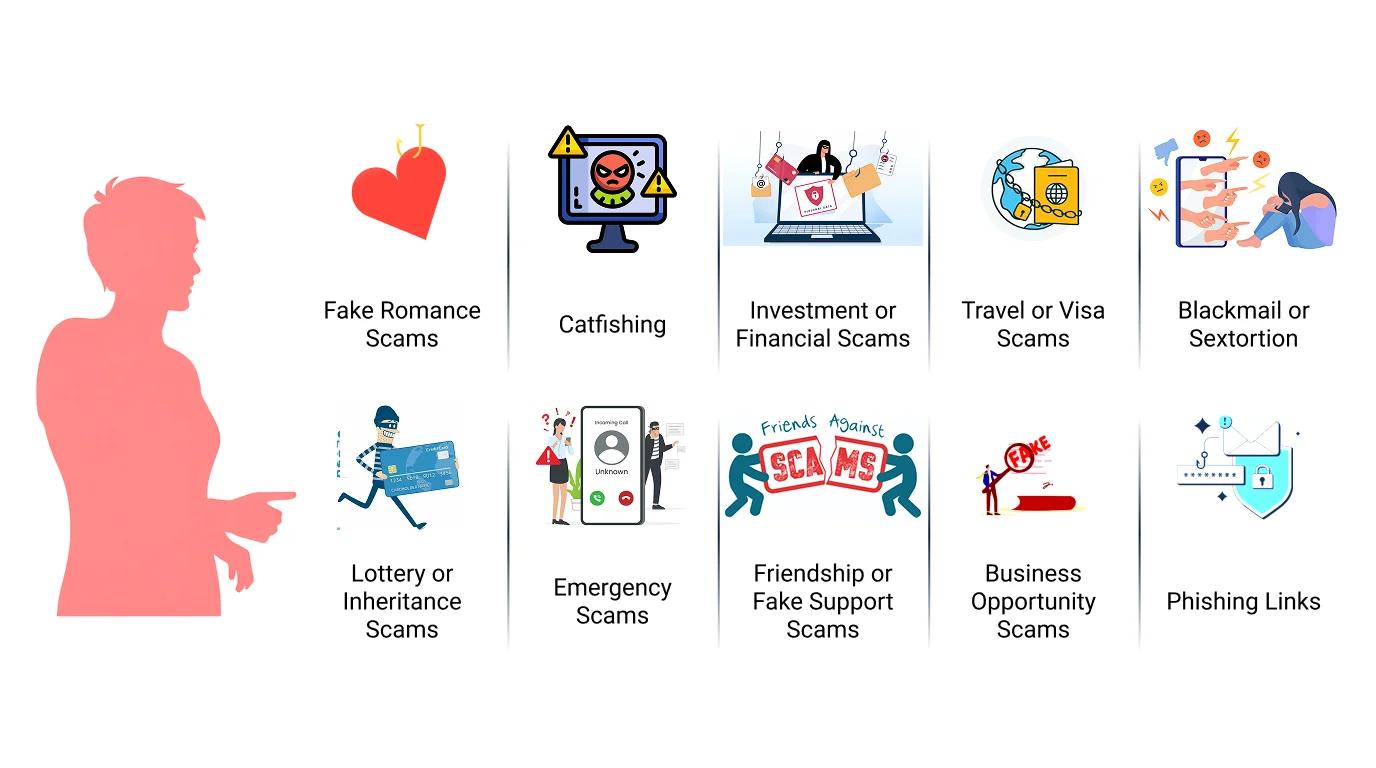
- Fake Romance Scams - Scammers make fake profiles and pretend to fall in love. They gain trust and then ask for money, gifts, or help with fake emergencies.
- Catfishing - Someone uses other people’s photos or identity to look attractive and trustworthy, tricking victims into sending money or personal information.
- Investment or Financial Scams - Scammers convince victims to invest money into fake businesses, cryptocurrencies, or other opportunities, using love as a reason.
- Travel or Visa Scams - Scammers ask for money to help with travel tickets, visas, or immigration fees so they can “visit” the victim.
- Blackmail or Sextortion - Scammers get intimate photos or videos from victims and then threaten to share them unless money is paid.
- Phishing Links - Scammers send links pretending to be dating websites or apps to steal login information, banking details, or personal data.
- Lottery or Inheritance Scams - Scammers tell victims they have won a prize or inheritance but need to pay fees or taxes first.
- Emergency Scams - Scammers pretend to be in urgent situations like accidents, kidnappings, or medical emergencies and ask for immediate money.
- Friendship or Fake Support Scams - Scammers build a strong friendship or emotional support online, then ask for money for fake causes.
- Business Opportunity Scams - Scammers offer fake jobs, side businesses, or investment opportunities as a way to get money from victims.
How to Prevent Future Scams
- Don’t rush into emotional or financial commitments. Scammers often try to move too quickly.
- Use Google Images, TinEye, or Yandex to check if profile photos are real or stolen. Look closely for any story that doesn’t make sense.
- Avoid moving conversations to WhatsApp, Telegram, email, or other apps too soon. Dating sites have safety measures to protect you.
- Requests for money, urgent emergencies, or high-pressure tactics are major warning signs.
- Never share sensitive details like bank info, ID numbers, or passwords with someone you haven’t met in real life.
- Turn on two-factor authentication, and use trusted antivirus software to keep your accounts safe.
- Tell the dating platform and your local cybercrime authorities if you notice anything suspicious or unusual.
- Keep an eye on your bank accounts, payment services, and credit reports to spot any strange activity quickly.
Conclusion
The case shows how a quick, well-coordinated response can trace stolen money, recover the client’s $20,000, and reduce financial and personal problems.
If you’re facing an online dating scam or need an expert to help recover your money, our team is ready to help you anytime.