 World Wide Offices

Category: Articles
What to Do If Someone Is Blackmailing You With Video
TABLE OF CONTENT :
Someone sent you a message that says, “I have your private video. Pay now, or I'll send it to everyone you know.” Many people face similar situations.
According to Malwarebytes, one in six mobile users faces extortion attempts involving videos or intimate content.
In the United Kingdom, police received more than 110 reports of child sextortion every month, mostly through messages that threaten to share private videos.
In this guide, we will explain exactly what to do if someone is blackmailing you with video or images.
Lets drive in.
What Is Video Blackmail and How Does It Happen?
Video blackmail also known as online extortion, is a form of cybercrime where someone threatens to share a video of you without your consent unless you comply with their demands. The scary part is that blackmailers usually exploit fear, shame, and secrecy to pressure victims into compliance. With smartphones, social media, and video call apps, almost anyone can become a target.
Common Types of Video Blackmail:
- Private or Intimate Videos - These are personal videos recorded in private moments - sometimes willingly, sometimes without understanding. Blackmailers exploit these intimate clips to pressure victims.
- Edited or Deepfake Videos - Advanced technology now allows cybercriminals to create fake videos, including deepfakes, where your face or identity is superimposed onto explicit content. Even if the video isn’t real, the threat can feel very real.
- Screen Recordings from Video Calls - Many blackmailers record video calls or live chats secretly. Even casual video chats can be captured and later used to threaten victims.
- Hacked or Stolen Personal Videos - Videos stored on cloud drives, computers, or mobile devices can be hacked or stolen. Once the video is in a criminal’s hands, it becomes a tool for extortion.
Where Blackmailers Usually Operate?
Social Media Platforms - Facebook, Instagram, TikTok, and other platforms are often used to connect with potential victims and threaten them.
Dating Apps - Apps like Tinder, Bumble, and others can be risky if personal videos or images are shared. Blackmailers sometimes target people looking for relationships or casual chats.
Messaging Apps (WhatsApp, Telegram, Messenger) - Cybercriminals constantly reach victims directly through encrypted messaging apps, which make it easier for them to hide their identity and create pressure.
Email and Cloud Storage Leaks - Some blackmailers obtain videos through hacked emails, cloud storage accounts, or phishing attacks. Once they have access, they can send threats and demands directly, usually claiming they have more material than they actually do.
Early Red Flags (Before the Threat)
The signs are usually similar during online interactions with someone you've recently met:
- Fake Profiles - The person's online profile may seem suspicious, with few posts, a lack of friends, followers, or overly polished pictures.
- Moving Too Quickly - They express strong emotions or try to start a serious relationship very quickly, a tactic sometimes called "love bombing".
- Quick Platform Switch - They immediately want to move the conversation from a public social media site or dating app to a more private messaging platform like WhatsApp or Snapchat.
- Pressure for Intimacy - They pressure you to engage in sexual conversations, exchange intimate images, or participate in a video call where you are naked or semi-naked. They might even send a fake or stolen image of themselves first to build a false sense of trust.
- Excuses for Their Camera - They make excuses for why their own webcam or microphone is not working during a video chat, and pressuring you to use yours.
- Feeling Uncomfortable - Trust your instincts. If something about the communication feels "off" or makes you feel uncomfortable, it's likely a red flag.
Signs That You Are Being Blackmailed With a Video
If you are currently being targeted, look for these specific indicators:
- Direct Threats - You receive messages explicitly stating they have a video of you and will send it to your family, friends, or coworkers.
- Proof of Content - The blackmailer sends you a screenshot of the video, a snippet, or a "compilation" showing the video alongside your contact list or social media profile.
- Financial Demands - You are asked to pay via hard-to-trace methods like cryptocurrency (Bitcoin), gift cards, or wire transfers.
- High-Pressure Tactics - They set strict deadlines (pay within 2 hours) and use aggressive or angry language to keep you from thinking clearly.
- Escalating Demands - If you pay once, they immediately ask for more money; that means paying does not solve the problem.
- Refusal to Delete Content After Payment - Blackmailers will almost always ask for more money even after the first payment, as they rarely delete the content.
What You Should Do Immediately If Someone Is Blackmailing You
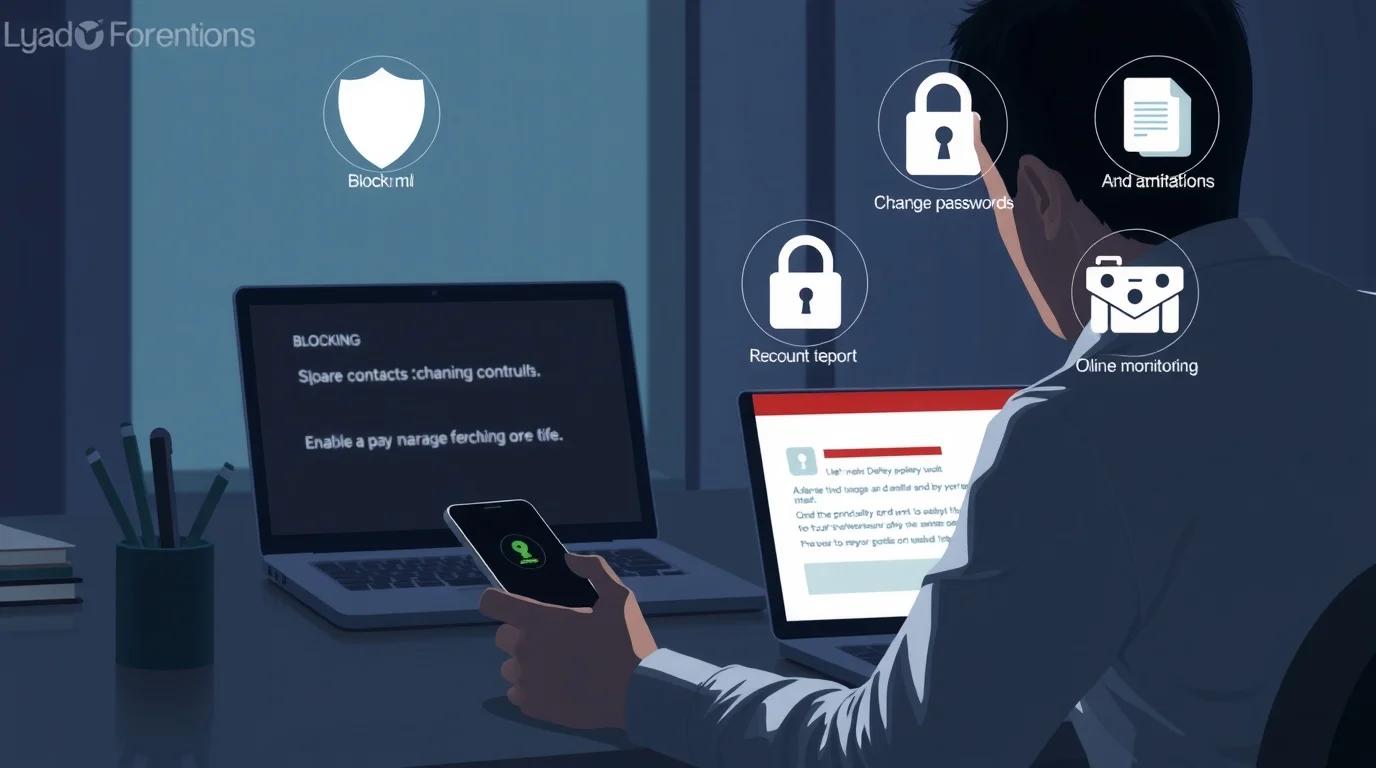
When someone threatens you with a private video, the first thing you must do is not reply, argue, beg, or try to explain yourself.
Every message you send gives them power and hope that they can control you. Block them on your phone, email, and every social platform.
Whatever you do, don’t pay. No money, no gifts, no favors. If you give in once, they’ll see you as an easy target and demand more. If you’ve already sent money, contact the service right away - your bank, MoneyGram, or whatever was used - and see if you can cancel it.
Now its time to take screenshots of messages, emails, usernames, profile details, or payment info like Bitcoin addresses or bank numbers. Even if seeing it makes you upset, don’t delete anything. This will help the authorities later.
Next, change passwords to strong and unique ones, and turn on two-factor authentication wherever you can. If the blackmailer has access to any of your accounts, this will block them immediately.
Then, report to the authorities. Blackmail is a serious crime. Go to your local police station and file a report. They can connect you with cybercrime experts.
In the US, you can also report to the FBI Internet Crime Complaint Center (IC3) or contact your local FBI field office.
If you are under 18, consider reporting to the National Center for Missing & Exploited Children (NCMEC) to help prevent intimate images from being shared online.
Notify the social media sites, messaging apps, or other platforms where the blackmail occurred. They can suspend the blackmailer's account and may be able to help with removing any shared content.
Finally, set up a Google Alert for your name, so you’ll know immediately if anything about you pops up online.
Relevant Blog - How to Deal with Social Media Blackmail
How to Remove or Prevent the Video From Being Shared
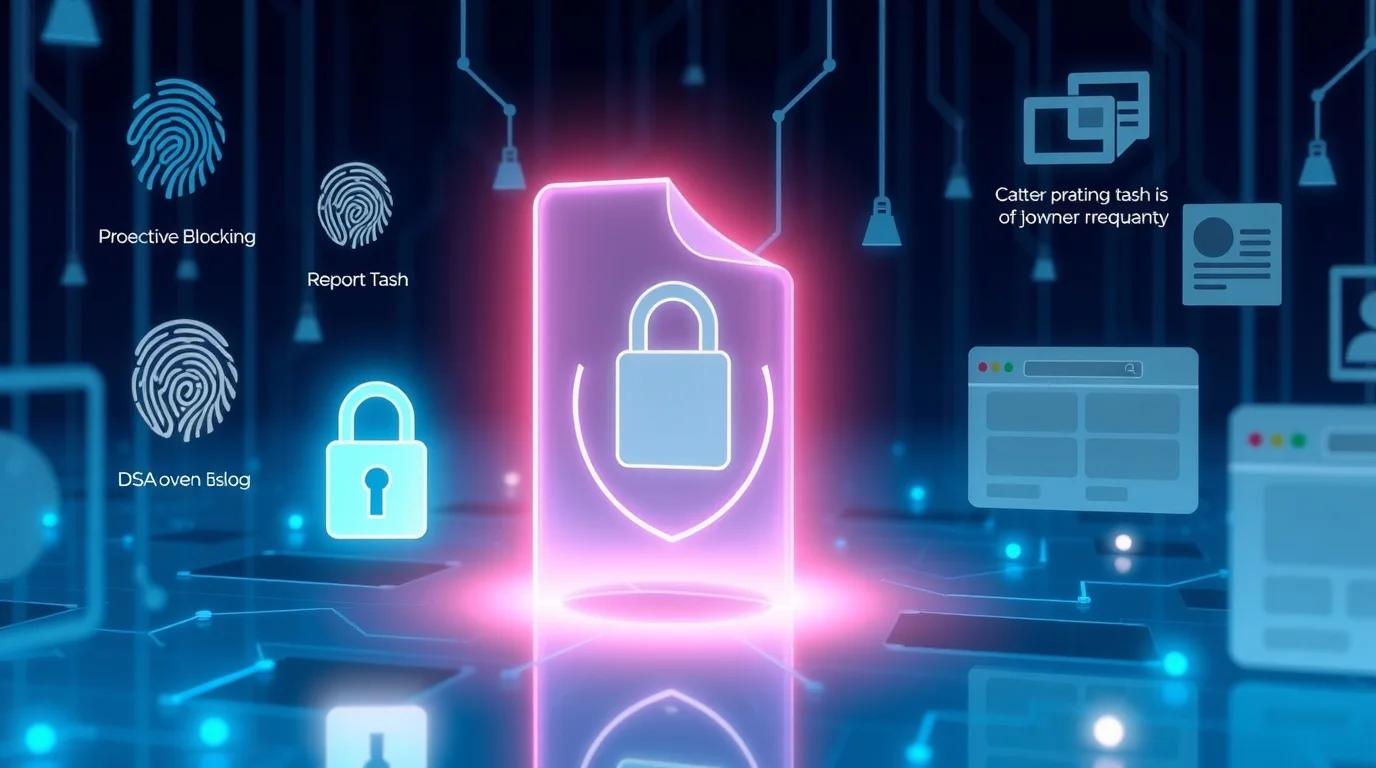
Many legal frameworks exist to block a video from being shared or to remove it.
01 # Proactive Blocking (Pre-emptive)
If you still have the video or a copy of the content, you can use specialized technologies to prevent it from ever being successfully uploaded to major platforms.
- Adults (18+) - Create a case at StopNCII.org. This tool generates a "hash" (a unique digital fingerprint) of your video on your device, so the actual file never leaves your hands. This hash is shared with participating partners like Facebook, Instagram, TikTok, OnlyFans, and Reddit to automatically block the video.
- Minors (Under 18) - Use the Take It Down service provided by NCMEC. This allows those who were under 18 when the video was created to prevent its spread across major platforms like Snapchat, TikTok, and Meta apps.
02 # Removal from Social Media and Web Platforms
If the video is already online, you have to quickly report it for immediate takedown.
- Platform-Specific Reporting - Use the "Report" or "Abuse" tools on the site where the video is hosted (e.g., YouTube, X, or Discord). Most platforms have strict policies against "Non-Consensual Intimate Imagery" (NCII) and will prioritize these removals.
- Copyright Takedown (DMCA) - If you recorded the video yourself, you legally own the copyright. You can issue a DMCA Takedown Notice to the website host or search engines to force its removal.
03 # Removal from Search Results
Even if a video is on a site that refuses to remove it, you can make it nearly impossible for others to find by "de-indexing" it from search engines.
- Google Removal Request - Use Google’s "Request to remove personal information" form. Google will remove URLs from search results if they contain non-consensual intimate imagery or if the site uses exploitative removal practices (charging a fee to take it down).
- Bing and Other Engines - Submit similar requests to Microsoft Bing and DuckDuckGo to ensure the link does not appear in global searches.
04 # Professional Services
For complex cases where a video has spread to multiple "tube" or "revenge porn" sites, professional services can manage the cleanup.
- Reputation Management - Services like TechForing specialize in detecting and managing legal takedown filings across hundreds of platforms.
- Court Orders - A civil attorney can help you obtain a court order for removal, which is legally binding for authors, publishers, and even hosting companies.
Legal Options Against Video Blackmailers

The law gives strong protection against video blackmail, also called sextortion or revenge porn, allowing victims to take both criminal and civil action.
New Federal Criminal Laws (U.S.)
TAKE IT DOWN Act (2025) - Enacted on May 19, 2025, this landmark federal law criminalizes the non-consensual sharing and the threat to share intimate images or videos.
It covers both authentic footage and AI-generated "digital forgeries" (deepfakes). Violators can face up to two years in prison for adult victims and up to three years for cases involving minors.
State-Level Criminal Prosecution
As of May 2025 all 50 U.S. states have made it a crime to share private intimate images without permission. Blackmail using these images can be punished under laws for extortion, stalking, or threats. Police can use these laws to get warrants, take the offender’s devices, and permanently delete the videos.
Civil Legal Remedies
You can take a blackmailer to civil court to get money, even if they are not charged with a crime. Under the Violence Against Women Act (updated in 2022), victims can sue anyone who shares their private images without permission and get money for damages and legal fees.
A court can issue a permanent injunction (a "Cease and Desist" with court backing) that legally mandates the blackmailer to delete all copies of the video and stop all contact.
If the blackmailer is anonymous, a lawyer can file a 'John Doe' lawsuit and use court orders to make websites or internet providers reveal who they are.
International Legal Landscape
- United Kingdom - The Online Safety Act (2023) and 2025 updates by Ofcom make platforms responsible for removing illegal content, including blackmail videos.
- European Union - The Digital Services Act (DSA) lets authorities fine platforms that ignore reports of non-consensual images.
- Canada - Section 162.1 of the Criminal Code makes sharing intimate images without permission a crime, with up to five years in prison.
How to Protect Yourself From Video Blackmail in the Future

If you want to protect yourself from video blackmail, you need a proactive "privacy-first" strategy that combines advanced digital tools with stricter personal boundaries.
Use Hardware-Based Security
In 2025, passwords and SMS codes are no longer enough. The safest option is the YubiKey from Yubico. It’s a physical security key that blocks hackers, even if they know your password.
Encrypted Communication
Only share sensitive or private content through end-to-end encrypted apps like Signal, which do not store message metadata or backups on their servers.
Physical Camera Privacy
Use physical sliding webcam covers on all laptops, tablets, and phones to prevent "camfecting" (remote activation of your camera by malware).
Compartmentalize with "Sudos"
With all-in-one privacy apps, you can create “Sudo” profiles. These profiles come with alternate phone numbers, emails, and browsers. They let you join dating apps or social platforms without linking anything to your real identity.
Verify Before Sharing
Be extremely cautious with individuals who move too quickly toward intimate topics or "off-platform" chat (moving from a dating app to WhatsApp).
Assume "The Internet is Permanent"
Always act as if the internet never forgets. Even if an app says a message will disappear, someone can still record it. Screen recording or altered apps can easily get around privacy rules. After you share something, it’s no longer fully in your hands.
Deepfake Awareness
Blackmailers may use AI to create fake videos that look real, even if you never recorded anything. If someone threatens you with a video you know is fake, report it right away to the FBI’s IC3 as an AI extortion case.
Set Up Google Alerts
Create Google Alerts for your full name and common identifiers to receive an immediate email if your information appears in new search results.
Regular Privacy Audits
Every three months, review the "Privacy Checkup" tools on platforms like Facebook and Google to make sure third-party apps no longer have unnecessary access to your data.
Strengthen Logins
Always use long, unique passwords with 16 or more characters. Add multi-factor authentication to all your accounts. If possible, choose passkeys or hardware security keys like YubiKey instead of SMS codes, because text messages can be intercepted.
The best way to avoid video blackmail is not to record or send private videos or photos. Even if the conversation feels private, once you send something online, you lose control of it.
When to Contact a Cyber Investigation Expert
If the police are taking too long, you should contact a cyber investigation expert. These professionals use advanced digital tools to deal with blackmail cases. They are especially helpful when the blackmailer is anonymous or based in another country.
Contact an expert immediately in the following scenarios:
- To identify an anonymous blackmailer, Experts use IP tracing, metadata analysis, and digital footprints to uncover the real-world identity of hackers using fake profiles or encrypted apps.
- If the video has already been leaked, they can scour the internet, including the dark web and smaller video-sharing sites, to find and work on removing the content.
- To verify if your device is compromised - If a blackmailer claims they hacked your webcam or files, an expert can perform a security audit to determine if the threat is a bluff or a legitimate malware infection.
- To gather court-admissible evidence, they ensure the "chain of custody" for digital evidence remains intact, which is critical if you plan to prosecute the offender.
Consult reputable firms like TechForing that specialize in sextortion resolution.
Frequently Asked Questions
What is sextortion?
Sextortion is a serious crime and a form of online blackmail where an individual is coerced into providing sexual images, money, or other demands under the threat that their private, compromising material will be publicly shared.
Can the police help with blackmail?
Yes. The police can investigate and catch the person blackmailing you.
Can I sue someone in another country for blackmail?
Yes, but it can be complicated. A lawyer or cyber investigation expert can help trace the blackmailer.
Should I ignore sextortion?
No. Ignoring it won’t make it stop.
How can I outsmart a blackmailer?
Never pay or try to negotiate. Block them and save all evidence. Strengthen your passwords and security. Report the blackmailer to the police and the platform. If needed, hire a cyber investigation expert to find the person and remove leaked videos.
On a Final Note
Video blackmail is a serious crime that can affect anyone. It can feel scary and isolating, but remember that you are not alone. Many people faced the issue.
Prevention is always better than a cure. Dont share private videos, use strong passwords, enable two-factor authentication, and cover your cameras when not in use.
If you are dealing with blackmail, contact TechForing, an expert online blackmail investigation firm that specializes in tracing anonymous blackmailers.