 World Wide Offices

Category: Articles
Top Cryptocurrency Frauds 2025 & How to Recover Your Money
TABLE OF CONTENT :
Cryptocurrency has given many people a chance to make money, but it has also opened the door for scammers. Every year, fraudsters steal billions of dollars from investors by committing cryptocurrency frauds.
In 2022, scammers took $14 billion; in 2023, only Americans lost $5.6 billion; in 2024, crypto scams cost people $2.2 billion; in 2025 (up to March), $1.6 billion.
Scammers use fake investment schemes, hacked exchanges, and other tricks to steal money. If you want to invest in crypto or already invested, you need to know how these scams work.
In this guide, we’ll explain the most common cryptocurrency frauds in 2025 and, most importantly, show you how to get your money back if you are already scammed.
What is a Cryptocurrency Scam?
A crypto scam is a type of financial fraud where scammers steal digital assets instead of cash.
They use common tricks, like pump-and-dump schemes, where they convince investors to buy an asset with false claims about its value. Some sell digital assets at fake market prices. Scammers may also trick victims into using digital currency to pay for fake transactions.
Since cryptocurrency can be easily converted to cash, processed through third-party apps, and used without revealing a person’s identity, scammers find it an ideal tool for fraud.

Why do fraudsters find cryptocurrency so attractive?
Fraudsters are drawn to cryptocurrency because it’s a fast-growing and unpredictable market. The high public interest makes it an easy target. Here’s why crypto is so appealing to them:
Crypto exists online, so criminals only need a computer to launch attacks like scamming.
Once a transaction is made, it can't be undone unless the receiver willingly sends the funds back. If a fraudster gets access to an account or tricks someone into sending money, getting it back is nearly impossible.
Crypto operates without a central authority. If a custodial exchange gets hacked, users can lose everything, and there’s no built-in protection. With non-custodial wallets, figuring out who's responsible for fraud is tricky.
Anonymity makes things even easier for fraudsters. Many crypto platforms don’t require personal details; criminals can create multiple wallets to hide their tracks. While blockchain can trace transactions, identifying the actual owner is tough.
Cryptocurrency Frauds in 2025
There are many scams in the crypto world, and you should know how to recognize them. Here are some of the most common:
Ponzi Schemes - Scammers promise high profits but use money from new investors to pay earlier ones. There’s no real business behind it. When new investments stop, the whole thing collapses, and investors lose their money.
Pump and Dump - Scammers promote a crypto or NFT project, making it seem valuable. They hype up, increase the price, and then sell their shares, leaving others with worthless assets.
Pig Butchering Scams - Cryptocurrency Scammers gain a victim’s trust through social media or dating apps. Once they build a connection, they convince the victim to invest in a faked crypto project.
AI-Powered Scams - Scammers use AI to make their tricks more convincing. They create fake investment advice, deepfake celebrity endorsements, or AI chatbots that pretend to be customer support. AI can also help them generate realistic phishing messages.
Fake Initial Coin Offerings (ICOs) - Some companies claim to launch new cryptocurrencies and ask people to invest in them. Once they collect enough money, they disappear, leaving investors with nothing.
Fake Exchanges - Some websites look like real crypto exchanges, but they are actually fake. When people deposit money to trade, scammers take it and vanish.
Giveaway Scams - Scammers pretend to be famous people or big companies and promise to double any cryptocurrency sent to them. Many victims fall for this trick, hoping for quick profits, but they lose their money.
Impersonation Scams - Scammers act like trusted organizations, customer support teams, or well-known figures. They convince people to share their private information, which they later use to steal funds.
Social Engineering Fraud - Scammers trick you into giving away your account details. They pretend to be someone you trust- like a government official, a well-known company, tech support, a neighbor, or a coworker.
Romance Fraud - Some fraudsters use dating sites to make you believe you are in a real relationship. Once you trust them, they shift the talk to fake cryptocurrency deals. They may ask for coins or account information or even request help with a fake money emergency.
Investment or Business Opportunity Fraud - Fraudsters attract you with promises of huge, “guaranteed” returns on your cryptocurrency investment. These scams often lead to losing your money when you find out that no returns are given.
Cloud Mining Scams - Some platforms ask you to pay upfront capital to share in mining power and rewards. They claim to own mining equipment but do not actually do so. That means you pay, but you never get any rewards.

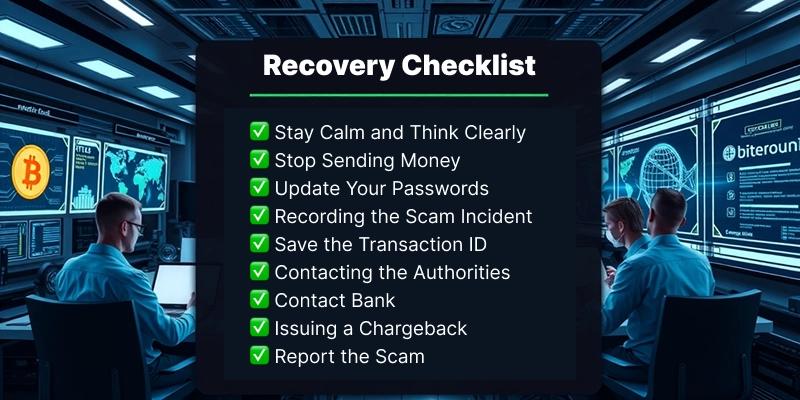
How to Recover Money From a Crypto Scammer
If you lost money in a crypto scam, here’s what you should do right away:
Stay Calm and Think Clearly
Realizing you got scammed in crypto can make you feel upset, angry, or even scared. But staying calm will help you handle the situation better.
Before doing anything, stop for a moment. Breathe in, breathe out. A clear mind will help you make more suitable decisions.
It’s normal to feel desperate, but acting too fast can make things worse. Take your time and think before you act.
Share your experience with a friend, family member, or someone in the crypto community like TechForing. They can give you support and helpful advice.
Stop Sending Money
If you get scammed, don’t send any more money. But don’t block the scammer right away. Keep the conversation open in case you need information for a report or to get your money back. Just be careful- don’t share personal details or agree to anything they ask.
Update Your Passwords
If scammers get into your financial accounts, they may have your login details as well. To keep your other accounts safe, try these steps:
- Create strong, unique passwords using a mix of uppercase and lowercase letters, numbers, and symbols.
- Operate a password manager to save your passwords and get alerts if any accounts are at risk.
- Turn on multi-factor authentication (MFA) and use an authenticator app for added security.
Recording the Scam Incident
It’s important to gather as much proof as possible to help recover your funds and report the crime.
Take screenshots of all chats, transactions, and any other evidence related to the scam. These will help prove what happened when you report it.
Keep any digital clues, like email headers, IP addresses, or website links. This info could help authorities with their investigation.
Write down a clear timeline of what happened, including dates, times, and details of your interactions with the scammer. This will give a complete view when you report the incident.
Save the Transaction ID
If scammers tell you to send money to a crypto address, the transaction will create a unique code called a TXID once it’s confirmed on the blockchain.
The TXID is a special string of characters that acts like a receipt for the transaction. Authorities and crypto recovery companies can use it to track where the money went.
You can find the TXID by entering the wallet address on sites like blockchain.com and looking for the specific transaction.
Contacting the Authorities
After gathering the necessary evidence, it's important to report the cryptocurrency frauds to the right authorities.
Get in touch with your local police and share all the evidence you've collected. They'll guide you through the process and start an investigation.
Report the scam to the financial authorities in your area. They can suggest advice and may be able to take legal action against the scammers.
Contact Bank and Cryptocurrency Exchange
Let your bank know about the scam and share any proof you have. If the fraud involves a crypto exchange, inform them immediately with all the details. They might be able to block the scammer’s account or help you get your money back.
Issuing a Chargeback
A chargeback lets your bank try to reverse a payment if you think you’ve been scammed. It’s a way for your bank to refund your money if something goes wrong with a purchase.
If you lost money in a crypto scam, a chargeback usually won’t help. That’s because crypto transactions aren’t covered by the rules. But if you used a credit or debit card to buy crypto, your bank might still be able to help.
Report the Scam
If you get scammed, report it immediately to the cryptocurrency exchange or platform where it happened. Give them all the details, including transaction info, timestamps, and any messages you exchanged with the scammer.
If you live in the USA, report the scam to the Federal Trade Commission (FTC). The FTC fights against fraud, and filing a complaint on their website helps stop crypto scams.
If you live outside the USA, report it to the right authority in your country:
- Canada: Canadian Anti-Fraud Centre (CAFC)
- UK: Financial Conduct Authority (FCA)
- Australia: National Anti Scam Center
- India: Indian Computer Emergency Response Team (CERT-In)
- Singapore: Monetary Authority of Singapore (MAS)
- Germany: Federal Criminal Police Office (BKA)
- France: Financial Crime Office (OCRLF)
- Japan: Japan Anti-Fraud Organization
- South Korea: Korean National Police Agency
Act fast to increase your chances of recovering your money and stopping the scammers.
Contact Customer Support
How do you get help from a crypto exchange if you’ve been scammed? Some exchanges have a fraud hotline you can call for issues like lost access or stolen crypto. If they don’t, contact their customer support team first- they can guide you to the correct department.
Seek Professional Help
Hiring a reputable crypto recovery service like TechForing Cybersecurity can improve the chances of tracking and reclaiming stolen funds.
TechForing CyberSecurity is a trusted multinational cybersecurity consultancy with experience in over 90 countries. Specializing in digital forensics and blockchain analysis, TechForing helps victims track lost assets and investigate crypto scams. Recognized by BBC, CNN, and Forbes, the company provides expert support to those affected by fraudulent transactions.
How to Stay Safe from Scams
Scammers are everywhere, but you can protect yourself by being careful. Here are some simple ways to avoid getting scammed:
- Don't click on unknown links or call random numbers from emails, messages, or social media. If someone contacts you about money, ignore them.
- Never share your private cryptocurrency keys. These keys control your crypto wallet, and no one else should ever have them.
- Avoid "get rich quick" offers. If something sounds too good to be true, it’s probably a scam.
- Ignore random investment managers. If someone claims they can grow your money fast, don’t believe them.
- Be careful with online relationships. If you meet a person on a dating app, don’t send them money unless you've met them in person.
- Watch out for fake celebrity messages. Real celebrities won’t ask you to buy cryptocurrency or send them money.
- Don't trust emails or texts about frozen accounts. If you get a message saying your bank or crypto account is locked, contact the company through their official website.
- Verify government messages. If someone claims to be from a bank, law enforcement, or any official agency, don’t reply directly. Instead, check their real website for contact details.
- Avoid sketchy job offers. Jobs asking you to convert cash to crypto or become a "crypto miner" are often scams.
- Don't fall for blackmail. If someone says they have private photos or videos of you and demands crypto, don’t panic- report them instead.
- Ignore "free money" offers. Scammers often promise free crypto, but they just want to steal your funds.
Staying careful and using common sense can help you avoid scams. If something feels off, it’s best to stay away.
Conclusion
Cryptocurrency has grown fast, attracting many scammers who trick people into losing their crypto in different scams.
But that doesn’t mean you have to fall for them too. Hopefully, this entire article has helped you understand the common crypto scams and how to stay secure from them.
Lost cryptocurrency scam recovery can be challenging without professional assistance. If you’ve been scammed, book a meeting with TechForing Cybersecurity for expert guidance.