 World Wide Offices

Category: Articles
How to Deal with Social Media Blackmail
TABLE OF CONTENT :
Social media lets you stay in touch with friends and share your daily life. But scammers and blackmailers can use social platforms to target people.
According to Malwarebytes’s 2025 research, one in six mobile users worldwide face sextortion or extortion scams.
In this guide, you’ll learn how to deal with social media blackmail and protect your online life from threats.
What Is Social Media Blackmail?
Social media blackmail happens when someone threatens to share your private information, photos, videos, or messages unless you do what they want. They may ask for money, favors, or even try to manipulate your emotions.
Social media platforms like Facebook, Instagram, TikTok, WhatsApp, and Snapchat encourage people to share their lives. Sometimes, oversharing personal details or talking to strangers can make you a target.
Blackmail can appear in many forms:
- Sextortion - Threats to post intimate photos or videos, often targeting young people.
- Money demands - Requests for cash or cryptocurrency to avoid exposure.
- Reputation attacks - Threats to tell friends, family, or colleagues personal secrets.
Many blackmailers do not hack accounts. They use information you shared or content from others.
Common Tactics Blackmailers Use on Social Media
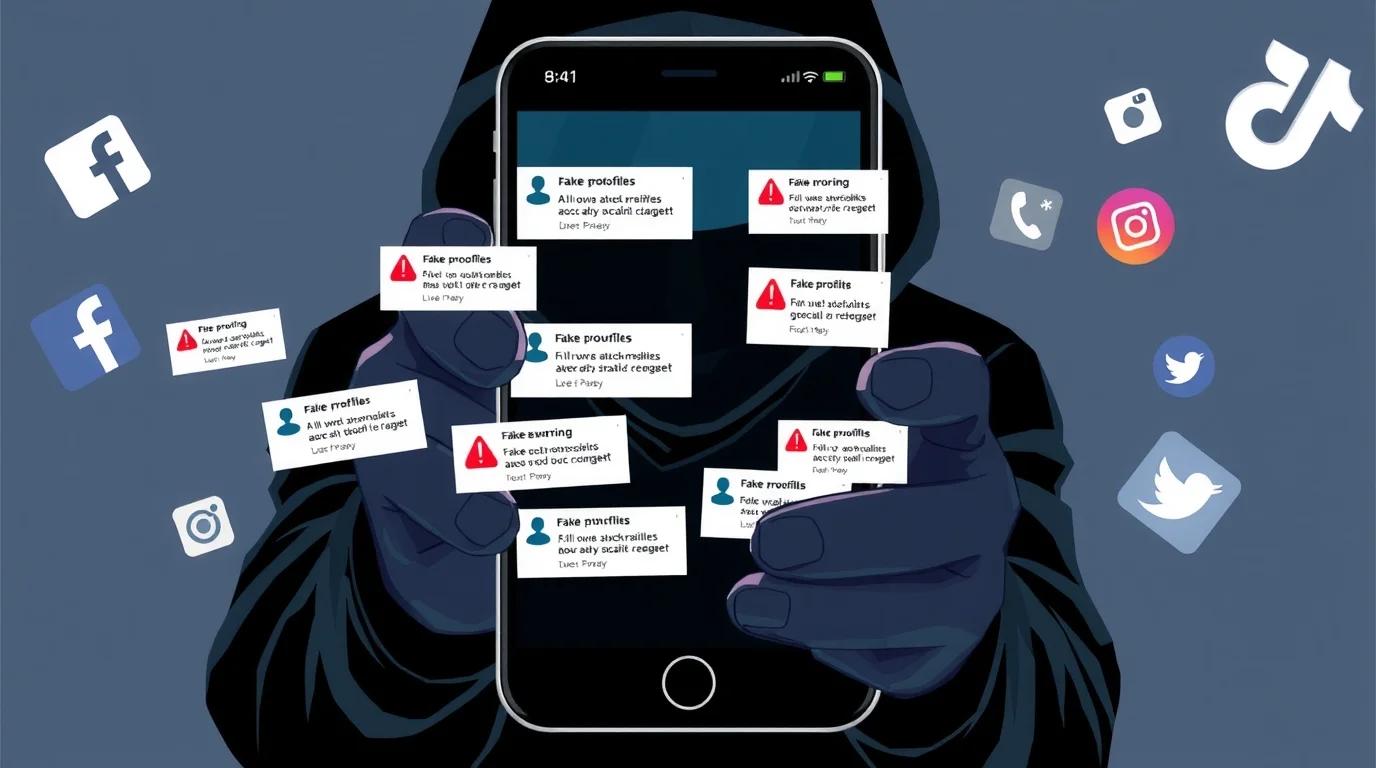
Here are the most common tactics you need to watch out for:
Fake Profiles and Catfishing
One of the most used tactics is catfishing. Blackmailers set up fake profiles using stolen pictures, fake information, or AI-generated faces.
They spend days or weeks building your trust using social engineering techniques. People who seek romance or emotional support online face the highest risk.
Relevant Blog - What to Do If You’ve Been Targeted by a Romance Scam
Impersonation of Authority
Cybercriminals pretend to be law enforcement, government officials, or corporate representatives to scare you. They use fake email addresses, VOIP phone numbers, or official-looking social media accounts and threaten fines, arrests, or legal action.
Hacked Accounts and Account Takeover (ATO)
Hackers can hijack accounts of your friends or family through phishing attacks, credential stuffing, or malware. Once an account falls into their hands, the messages feel real, and you may respond without thinking.
Sextortion
Blackmailers use remote access trojans (RATs), screen recording malware, or social engineering during live video calls to grab compromising footage. They then use the footage to demand payment, often in cryptocurrency.
Hacking and Malware Claims
Attackers may not actually access your device, but they tell you they did to scare you. They send phishing emails, fake virus alerts, or spoof security warnings to make you worry that someone is watching through your webcam or microphone.
Data Scraping and OSINT
Many online blackmailers turn to Open-Source Intelligence (OSINT) to collect public information from social media, forums, and data brokers. They pull birth dates, email addresses, geolocation, friend lists, and even leaked credentials.
Deepfakes and AI Manipulation
Blackmailers now use AI-based deepfake technology to turn harmless media into realistic, explicit images or videos. They use these files to scare victims. Photo-morphing, video interpolation, and synthetic media generation help them make the fake media convincing.
Relevant Blog - What To Do If Someone Is Blackmailing You with Nudes
Doxxing and Identity Theft Threats
Besides explicit content, blackmailers can threaten to reveal your sensitive financial, personal, or professional details. They could use your social security number, bank account information, or login credentials against you.
What To Do When Someone is Blackmailing You
Here’s a step-by-step guide on what you should do immediately.
01 # Stay Calm and Assess the Situation
Online threats can shake anyone. You may feel angry or scared, and that’s normal. A blackmailer wants you to react quickly, so stay steady and look at the problem with focus.
Ask yourself a few quick questions:
- Is the blackmailer targeting you, your family, or your business?
- What kind of material do they say they have?
- Are they trying to harm your money, reputation, or personal life?
A calm approach gives you more control and helps you move wisely.
02 # Never Made Payment
Paying a blackmailer may feel like the fastest way to end the problem, but the blackmailer usually comes back for more money.
Studies show that over 70% of online extortion cases lead to more demands after the first payment. So avoid paying under any condition.
Do not send money through wire, crypto, or gift cards.
03 # Avoid Direct Confrontation
Engaging aggressively or emotionally with the blackmailer can escalate the situation. Avoid sending angry messages, threats, or ultimatums.
- Instead, respond (if at all) in a neutral, factual tone while documenting the conversation.
- Keep communication to a minimum, as every message can become evidence.
04 # Secure Your Social Media Accounts
Blackmailers look for simple gaps like weak passwords or fake login pages. Make your accounts strong right away.
- Change passwords for all affected accounts and linked emails.
- Enable two-factor authentication (2FA) for extra security.
- Review account activity and remove unknown devices.
- Update privacy settings to restrict who can view your posts, stories, and personal information.
05 # Document Everything
Collecting evidence is essential to stop someone from blackmailing you online. Keep track of all communication-
- Take clear screenshots of chats, emails, and messages.
- Write down usernames, profile links, and exact times of threats.
- Record any demands for money or threats in video, audio, or text formats.
These records help police or digital forensic experts investigate and take action against the blackmailer.
06 # Block the Blackmailer
After securing your evidence, block the individual on all platforms. Most social media apps allow you to:
- Block the account completely.
- Report the account for harassment or blackmail.
- Restrict unknown users from contacting you further.
Watch closely, as blackmailers sometimes open new accounts to continue harassment. Adjust your privacy settings to stay safe.
07 # Remove or Protect Sensitive Content
If someone threatens to share your private photos, videos, or messages:
- Delete the content from social media or shared platforms as soon as you can.
- Take screenshots or save copies for evidence before deleting, since law enforcement might need the original files.
- Keep copies offline in a secure, encrypted folder for future investigation.
08 # Report on the Social Media Platform
- Facebook - Go to the user’s profile, click on the three dots, and select “Find Support or Report Profile.” Choose “Harassment or Threats” and submit the evidence.
- Instagram - Open the conversation or profile, click the three dots, select “Report,” and then choose “It’s inappropriate → Harassment or bullying.”
- WhatsApp - Open the chat, tap on the contact’s name, scroll to “Report Contact,” and include media or messages as evidence.
- TikTok - Go to the profile or video, tap the three dots, select “Report → Harassment/Bullying,” and submit details of the threat.
- Snapchat - Press and hold on the message, select “Report,” and follow the instructions.
09 # Report to Local Authorities
After securing evidence and staying safe, report the blackmail right away. Contact your local police or a cybercrime unit and share all the evidence you have.
Report the abuser’s accounts on the social media platforms where the threats happened. Platforms can remove harmful posts or accounts quickly.
In the United States, file a complaint with the FBI’s Internet Crime Complaint Center (IC3). In India, use the National Cyber Crime Reporting Portal or call 1930.
10 # Seek Help Immediately
Dealing with blackmail alone can take a heavy emotional toll. Reach out to friends or family who can give comfort and advice.
Professional counselors can help you manage fear or stress. Digital forensic experts or cybercrime professionals can guide you on practical steps to stop the blackmailer.
How Digital Forensics Can Help You Identify the Blackmailer
Here is how Digital forensics can help you-
- Forensics experts track IP addresses, login times, and device IDs to find the blackmailer’s location. Even if the person uses a VPN, experts study patterns and device behavior to reveal the real identity.
- Photos, videos, and documents have hidden data like location, device, and timestamps. Experts extract this information to connect files directly to the blackmailer and prove their intent.
- Blackmailers often delete messages or posts. Forensics can recover deleted chats, files, and images from phones, computers, and cloud accounts. Experts use data recovery tools and database analysis to save all important evidence.
- Experts extract chat histories, media, call logs, and location data from messaging apps and phones. They can even decrypt encrypted apps safely. You get a full record of the blackmailer’s actions.
- Fake profiles hide real people. Forensics links accounts by studying usernames, typing patterns, posting habits, and device information. Experts track multiple accounts to find the person behind the threats.
- Forensic evidence works in court. Experts maintain a chain of custody to show how they collected and preserved the evidence. Police and legal teams rely on this evidence to stop blackmailers and protect you.
How To Stop Someone From Blackmailing You Again

Here are seven practical steps to secure your accounts and stay safe from online blackmail.
Avoid Sharing Sensitive Content
The best way to protect yourself from blackmail starts with not creating content that others could misuse. Private photos, videos, and voice notes may feel safe when shared with someone you trust, but every digital file leaves a trace.
Even on apps with disappearing messages, screen recorders, third-party apps, or hidden tools can save files.
Many phones automatically upload media to cloud backups, so deleting a photo from the gallery does not remove it from Google Photos, iCloud, or WhatsApp backups. Blackmailers usually look for old content in hacked accounts.
Audit Past Content
Performing a digital audit lets you see what private information exists online or on your devices. Check social media archives, cloud accounts, old memory cards, and email attachments carefully.
Photos usually contain EXIF data that reveals the date, time, and GPS location. Blackmailers can use these details to make threats more convincing. Delete sensitive files from all folders, including “Recently Deleted” and cloud backups.
Search your name on Google to find old accounts or posts. Remove personal information from data broker sites, also.
Shorten Public Information
Attackers use open-source intelligence (OSINT) tools to collect details like your name, workplace, photos, and daily routines from social media posts. They combine these details to craft believable threats.
Protect yourself by hiding friend lists, removing location tags, and setting your profile to private. Turn off search engine indexing when possible. Reducing your public digital footprint makes OSINT-based attacks much harder to succeed.
Strengthen Passwords
Hackers easily break accounts with weak or reused passwords. They continually try credential stuffing by testing passwords stolen from other breaches. Use a strong, unique password for every account. Add at least twelve characters, combining letters, numbers, and symbols. Store passwords in a secure password manager. Check breach databases for your email. If any account appears, change the password right away.
Enable Two-Factor Authentication
Two-factor authentication adds an extra layer of security to your accounts. When you log in, the platform sends a one-time code to your phone or authenticator app. Hackers cannot access your account without that code.
Enable 2FA on social media, email, cloud storage, banking, and messaging apps. For high-risk accounts, use hardware security keys like YubiKey for the strongest protection.
Limit Privacy Setting
Review who can view your posts, tag you, send messages, or send friend requests. Protect sensitive information like phone numbers and emails by restricting access.
Disable features like “Allow others to find you by phone number” and “Show activity status.” Check every connected third-party app and delete unused ones.
Be Skeptical of Strangers
About 70% of online blackmail begins with scammers using fake profiles. They make realistic identities with AI photos or images found online. Some accounts even copy typing and posting behaviors using automation.
If a stranger starts sending romantic messages or requests personal photos, disconnect right away and block the user.
Relevant Blog - What to Do If You’re a Victim of Online Blackmail
FAQs
Can blackmailers target you through private messaging apps that claim to be encrypted?
Yes. Encrypted apps cannot stop someone from coercing you if they already have compromising material or trick you into sharing personal information.
Are minors more at risk of social media blackmail than adults?
Yes. Minors often lack experience and awareness of online dangers, which makes them easier targets.
How can I tell if a friend’s account has been hacked and used for blackmail?
Watch for unusual messages, posts that do not belong to your friend, unexpected login notifications, or requests for money and personal information.
Can social media blackmail happen through voice messages or audio files?
Yes. Blackmailers can record private audio messages or calls and threaten to share them.
Is it possible for blackmailers to manipulate group chats or community forums?
Yes. Blackmailers can impersonate members, spread false information, or share private content to pressure someone.
Are there legal consequences for someone who blackmails anonymously online?
Yes. Authorities can track digital footprints, and blackmailers can face fines, prison, or both.
Can blackmailers use information from old, inactive accounts?
Yes. Old accounts may contain personal information, photos, or messages that blackmailers can exploit.
What to do when someone blackmails you on social media?
Document all messages and threats, secure your accounts, and block the blackmailer. Report the account on the social platform and alert local authorities.
What to do if someone is blackmailing you with photos on Instagram?
Save evidence, remove or hide the content, block the user, and report the account to Instagram immediately.
Does the FBI deal with cyber crimes?
Yes. The FBI handles cybercrime complaints, including online blackmail, fraud, and threats in the United States.
How do you outsmart a blackmailer?
Do not give in to demands. Keep all communication factual and minimal. Let law enforcement or digital forensic experts like TechForing handle the case.
On a Final Note
Online threats can target anyone, so awareness is important. Keep a record of all messages and check account security regularly.
Avoid sending money or reacting angrily. Use strong passwords, two-factor authentication, and tighten privacy settings to stay safe.
If you feel scared or if someone is blackmailing you, get professional help. Experts at TechForing can investigate the blackmailer and keep you safe.