 World Wide Offices

Category: Articles
Benefits of Cyber Threat Intelligence in Protecting Your Organization
TABLE OF CONTENT :
Cyberattacks are growing every day, and many businesses aren’t ready for them. Just using antivirus or firewalls isn’t enough anymore.
In 2024, companies faced about 1,876 attacks every week, which is 75% more than the year before. And by 2025, cybercrime is predicted to cost the world $10.5 trillion.
That’s why Cyber Threat Intelligence (CTI) is so important. It helps you understand who might attack your business, how they might do it, and what you can do to stop them.
In this blog, we’ll explain how CTI works and how it can protect your business from hackers, data leaks, and other online threats.
What Is Cyber Threat Intelligence (CTI)?
Cyber Threat Intelligence, or CTI, is the process of collecting, analyzing, and using information about cyber threats to help organizations protect themselves better. It is not just about gathering raw data. CTI turns this data into clear, useful insights that help organizations predict, find, and respond to cyber risks quickly.
CTI is a flexible and ongoing part of a company’s cybersecurity system. It helps answer important questions like who is attacking, why they are attacking, how they do it, and how to recognize if an attack is happening. Because cyber threats change all the time, organizations need to keep updating their intelligence to stay protected.
There are four main types of CTI:
- Strategic Intelligence: Gives high-level insights to help make business and security plans.
- Tactical Intelligence: Provides details about attacker methods to help with quick responses.
- Operational Intelligence: Focuses on specific attacks so teams can act fast.
- Technical Intelligence: Shares technical details like signs of attacks to help security teams defend systems.
Using cyber threat intelligence services, organizations can move from reacting to attacks after they happen to stopping them before they cause damage. This improves security and lowers the cost and damage from cyber incidents.
The Benefits of Cyber Threat Intelligence
Find these seven key advantages you should know about:
Enhanced Incident Response Capabilities
One big benefit of CTI is that it helps teams respond to cyber incidents faster. When security teams know the latest tactics, techniques, and procedures (TTPs) used by attackers, they can find and stop threats more quickly. For example, if a new ransomware attack targets certain companies using a specific weakness, teams can fix that weakness right away. This helps reduce damage and get systems back up faster.
Proactive Cyber Defense
Instead of waiting for an attack to happen, CTI helps organizations prepare in advance. By learning how attackers behave and what they plan, companies can stop attacks before they start. For example, if CTI shows a rise in phishing emails that use a software flaw, the company can train employees to spot phishing and update security controls. This proactive approach keeps the organization safer.
Improved Risk Management
CTI gives security leaders like CISOs and SOC teams useful information about who might attack and how. This helps companies understand their risks better and decide where to focus their security efforts. For example, if CTI shows that a hacker group often targets banks by attacking payment systems, a bank can strengthen those systems first. This makes the best use of security resources.
Increased Employee Awareness and Training
Many breaches happen because of human mistakes. CTI helps by sharing the latest threats so organizations can train employees well. Employees learn how to spot threats like phishing and follow security rules. This awareness turns workers into a strong defense against cyberattacks.
Learn more from this blog - How to Detect Cyber Attacks
Illuminating the Unknown Threats
Some threats stay hidden until they cause damage. CTI helps find these hidden threats by watching places such as the dark web and hacker forums. This early warning lets teams act before attacks happen. For example, if stolen passwords appear online, security teams can alert users to change them and stop hackers from getting in.
Understanding Adversary Behavior
CTI helps us learn not just what threats exist but how attackers think and act. This helps companies plan better defenses. For example, if a hacker group avoids strong targets but attacks weaker partners, organizations can focus on protecting those partners. Knowing attacker behavior helps stop attacks sooner.
Empowering Business Leaders to Make Informed Decisions
CTI is useful not just for technical teams but also for business leaders like CISOs, CIOs, and CTOs. It helps them make smart decisions about where to invest in security and how to reduce risks. It also helps explain cyber risks to the board and other stakeholders. Using CTI, leaders can protect their company’s assets, reputation, and future.
In summary, cybersecurity threat intelligence helps organizations respond quickly to incidents, prevent attacks, manage risks, train employees, find hidden threats, understand attackers, and guide leaders.
Cyber Threat Intelligence Lifecycle
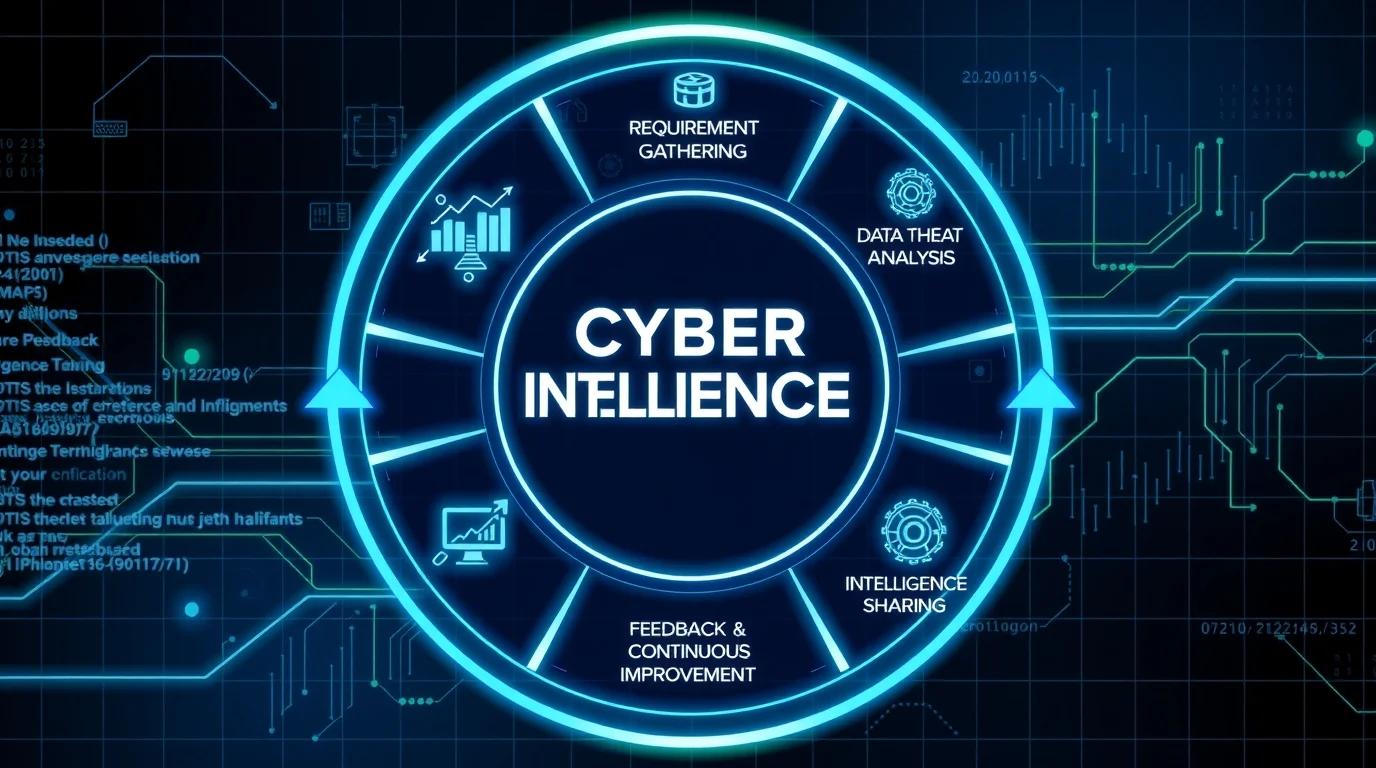
The Cyber Threat Intelligence (CTI) lifecycle has six main steps: Requirement Gathering, Data Collection, Data Processing, Threat Analysis, Intelligence Sharing, and Feedback and Continuous Improvement.
Step 1. Requirement Gathering
This is the first step. Here, the organization figures out which parts of its system could be attacked and what kinds of threats it might face. This helps the team guess who the attackers could be and how they might attack. By doing this, the CTI team can focus on what really matters.
It’s important to get threat data from the right places, like public websites, network logs, or expert advice. The team also sets clear goals so they know exactly what to look for and where to find it.
Step 2. Data Collection Methods
After setting the goals, the team starts collecting data. This step is very important because everything else depends on it.
They gather raw data using different methods like Open Source Intelligence (OSINT), commercial data feeds, and in-house tools. They might also do manual research, threat hunting, and share data with trusted partners.
To collect good data, both the quality and quantity matter. The better the data, the better the results. Working with cybersecurity experts helps reduce mistakes like false alarms.
Step 3. Processing Collected Data
Next is the Processing step. This is where the team cleans and organizes the data to make it easier to understand and use.
They sort the data, check for errors, group similar items together, and format it properly. Different types of data need different methods. For example, network traffic data may need special patterns to find useful details. If the data comes from people, it needs to be checked for accuracy.
The goal is to make sure the data is clean, correct, and ready for analysis.
Step 4. Analysis of Threat Data
Now, the team studies the processed data to find patterns and understand how threats might affect the organization.
They may use statistical tools or build models based on past attacks to guess what might happen in the future. This helps the team give clear advice and recommendations.
These insights are shared with technical teams and decision-makers so they can act fast. A strong analysis helps save money and respond to threats quickly.
Step 5. Dissemination of Intelligence
Once the analysis is done, the team shares its findings. This step is called Dissemination of Intelligence.
They use reports, dashboards, or presentations to make the information clear. These tools help security teams and leaders understand the risks and take action.
Keeping everyone updated is very important. Regular updates and open communication make sure the whole organization stays ready to handle new threats.
Step 6. Feedback and Continuous Improvement
In the final step, the organization reviews how well the CTI process is working.
They collect feedback from the people who use the intelligence to see what’s helpful and what can be better. Based on this, they improve tools, change data collection methods, or update how they share results.
Since cyber threats are always changing, constant updates and improvements help the organization stay protected.
FechForing is a leading name in cyber intelligence and helps organizations detect and stop threats before they cause damage. To learn more, click here.
Types of Threat Intelligence
Cyber Threat Intelligence (CTI) comes in different types, and each one helps in a unique way. When organizations understand these types, they can build better protection and improve their overall security.
1. Strategic threat intelligence (STI) gives a detailed view of cybersecurity trends. It helps with risk management and supports long-term planning. STI is meant for non-technical people, like executives and board members. It helps them understand why threat actors attack and what they are capable of doing. This type of intelligence uses open sources, like news and research papers, to show possible risks. When leaders use STI, they can make smarter decisions that match both their business goals and security needs.
2. Operational threat intelligence gives real-time updates about threats. It shows what kind of attack is coming, who is behind it, and when it might happen. Security teams use this to respond quickly and effectively. They collect this information from hidden or direct sources, sometimes even from threat actors themselves. Even though it’s hard to gather, this intelligence is very useful. Many teams use a cyber threat intelligence platform to collect and use this data faster, making their response stronger and more organized.
3. Tactical threat intelligence explains how cyber attackers work. It focuses on their tactics, techniques, and procedures (TTPs). This intelligence also includes indicators of compromise (IoCs) like bad IP addresses, domains, or URLs. IT teams and incident responders use this to quickly find and block threats. Security Operations Centers (SOCs) depend on tactical intelligence to improve how they respond to attacks. They often use automatic data feeds and API integrations to get this information fast and stay ahead of new threats.
4. Technical threat intelligence gives very detailed information that helps detect threats right away. It includes data like malicious IP addresses, file hashes, malware signatures, and domains. Teams can plug this information directly into systems like SIEMs and IDS to catch threats faster. Real-time feeds help security teams stay updated, so they can fix weak spots before attackers find them. This quick, hands-on approach gives cybersecurity teams the tools they need to defend their systems effectively.
To protect their digital systems, organizations need to use and combine all types of threat intelligence. Top cyber threat intelligence companies like TechForing offer complete cyber intelligence solutions that help predict threats before they cause harm.
Challenges of Cyber Threat Intelligence
Cyber Threat Intelligence (CTI) is important for protecting any organization from online attacks. However, doing CTI the right way comes with many challenges.
One of the biggest problems is information overload. CTI teams collect huge amounts of data every day. They have to process all this data and figure out what’s normal and what’s malicious. On top of that, they need to decide which threats matter most to their organization based on its size, industry, and risk level. This can be overwhelming.
Another challenge is keeping the information updated. Cyber threats change quickly. If the CTI is old or outdated, it can slow down threat detection and make the organization more open to attacks. To be useful, CTI must always be current.
Data relevance is also a problem. Not all threat intelligence applies to every company. What’s useful for one organization may not matter at all to another. Figuring out which data is relevant to a specific company and its systems takes time and skill.
Accuracy is another key issue. If CTI is low-quality or incorrect, it can cause false positives, which means the security team might waste time chasing fake threats. Even worse, they might miss real threats because they’re buried under too many alerts.
Finally, there’s the challenge of compliance. CTI sometimes includes personally identifiable information (PII). That means companies must follow data protection laws like GDPR or CCPA. If they don’t, they could face legal trouble.
To sum it up, CTI is powerful but not easy. Teams must deal with too much data, make sure it’s relevant and accurate, keep it updated, and follow privacy laws. Without good tools and experienced people, these challenges can be hard to manage.
If you need help overcoming these CTI challenges, TechForing is here to support you with expert guidance and reliable threat intelligence solutions.
Cyber Threat Intelligence - FAQs
What is threat intelligence in cybersecurity, and does every organization need it?
A cyber threat intelligence analyst uses data to identify threats that could target your organization. Every organization should use some level of cyber intelligence to stay ahead of attackers.
How does Cyber Threat Intelligence work with existing security systems?
Cyber threat intelligence connects with your current security tools through APIs, incident response platforms, and integrations that enable real-time detection and response.
What has the evolution of cyber threat intelligence included?
The internet’s growth brought more sharing and connection, but also more cyber risks. Early defenses were things like IP blacklists, antivirus, and firewalls. Over time, cyber threats like worms, spam, and botnets increased, pushing the need for better defenses. The rise of advanced persistent threats (APTs) led businesses and governments to form cyber threat intelligence teams. Since 2010, attackers have become more complex, making threat intelligence focus on understanding attacker tactics, techniques, and procedures (TTPs) so organizations can anticipate attacks, not just respond to them.
What are the common sources of threat intelligence?
The common sources of threat intelligence are:
- Internal data: Information collected from an organization’s own network logs, incident responses, and other internal sources.
- Open-source intelligence (OSINT): Information from public domain resources that anyone can access.
- Closed-source services: Information that is not available to the general public.
- Information sharing and analysis centers (ISACs): Organizations specific to certain business sectors that collect, analyze, and share threat information with their members.
- Government advisories: Updates and warnings released by agencies like the FBI (USA), National Cyber Security Centre (UK), and ENISA (EU).
- Dark web intelligence: Encrypted and anonymous information that reveals cybercrime activity, early warnings of attacks, and details about cybercriminals’ motives and methods.
How do internal and external threat intelligence work together to improve an organization’s cybersecurity?
Internal threat intelligence creates “contextual CTI” by looking at an organization’s own data and past incidents. This helps find the most important threats based on the company’s unique systems, products, and services. It also shows vulnerabilities and helps security teams build better incident response plans. External threat intelligence gives information about global and industry-specific threats, including tactics, techniques, and procedures (TTPs) used by attackers. Using both internal and external CTI together gives a full picture of the threat landscape, helping organizations stay ahead of threats and make their cybersecurity stronger and more focused.
What is vulnerability intelligence?
Vulnerability intelligence means studying security weaknesses to figure out how dangerous they are, based on how likely they are to be exploited, who might target them, and how they affect the business. It uses data like CVEs, proof-of-concept exploits, and information from the dark web. Cloud security teams use automated scans, risk-based prioritization, and virtual patching to protect systems before vulnerabilities get exploited.
How does cyber threat intelligence differ from vulnerability management?
Cyber threat intelligence looks outside the organization at possible threats and how attackers operate. Vulnerability management focuses on the organization to find and fix security weaknesses. Both are important to keep cybersecurity strong.
What is MITRE ATT&CK?
MITRE ATT&CK is a well-known framework that organizes attacker tactics, techniques, and procedures across attack stages. It helps security teams detect and stop attacks by mapping real-world threats. It covers enterprise, cloud, mobile, and industrial systems.
What is behavioral analysis?
Behavioral analysis detects threats by studying user and system behavior patterns, like strange login locations or unusual API calls. AI helps spot threats in real time without relying only on known attack signatures.
What are zero-day vulnerabilities?
Zero-day vulnerabilities are security flaws unknown to software makers and unpatched, so attackers can exploit them. In clouds, zero-days in APIs or container systems are very risky. Security teams use threat intelligence and virtual patching to protect before official fixes arrive.
Why is cyber threat intelligence important?
Threat intelligence is necessary because it helps organizations stay ahead of cyber attackers by providing insight into how threats work and what tactics they use. As cyber threats become more advanced, especially with things like APTs (advanced persistent threats), having this kind of intelligence allows defenders to better predict and stop attacks before they happen.
How TechForing Help
TechForing assists in protecting your business from cyberattacks with a full range of Cyber Threat Intelligence services. These include Threat Intelligence Feeds, Persistent Threat Intelligence, Crimeware Reporting, Threat Hunting, Digital Footprint Intelligence, and Threat Infrastructure Tracking. With 15+ years of experience, TechForing gives you easy-to-understand insights so you can stop attacks before they happen.
Protect your business today with TechForing’s trusted cyber intelligence solutions.